Client:
Bloomberg Philanthropies
Topic Areas:
Project Type:
Civic Engagement
Tackling Food Apartheid in Savannah, GA
A number of reasons have left entire neighborhoods in Savannah, Georgia with no easy access to fresh produce, negatively affecting the health and dietary standards of residents.

Our Approach
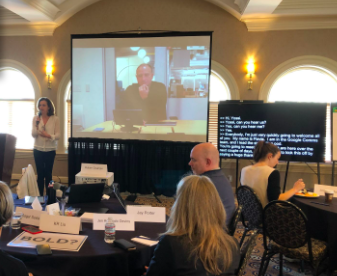
Opting for a proactive approach, Savannah engaged with the Bloomberg Harvard City Leadership initiative—a collaborative venture between Bloomberg Philanthropies and Harvard University. Over a span of nine months, a dedicated team from the city hall immersed themselves in a structured program. This process encompassed framing the pressing issue, actively involving the community for firsthand perspectives, brainstorming solutions rooted in acquired insights, refining and prototyping ideas, culminating in a comprehensive proposal presentation to the Mayor and City Council. Central to the program's success was the team's commitment to direct resident engagement, bypassing mere "proxies." This translated into tangible on-ground efforts, such as initiating dialogues with SNAP beneficiaries during farmers' truck drop-offs, implementing rapid prototype testing at high-footfall convenience stores, and orchestrating data collection at locales familiar to the impacted residents. This immersive engagement bore fruit, unraveling a plethora of insights and unveiling a diverse range of potential initiatives that transcended the previously debated, singular solution of constructing a supermarket in an unsuitable area.
Our Impact
By adopting a resident-centric approach, the team unearthed a rich array of possible initiatives that provided a broader, more holistic perspective, breaking away from the five-year-long singular focus. This innovative methodology promises a more informed and diversified strategy to combat the pressing challenge of food apartheid in Savannah.
See More Projects
 Facing a decline in the pursuit of certifications among mid-career professionals, ISACA faced the pressing challenge of redefining its target demographic, uncovering new avenues for expansion, and outlining a concrete strategy to roll out fresh offerings.
- Board members at University of West London secured funding and a a location for a new entrepreneurship center. Their next challenge was to turn it into a hub that launched and grew exciting new businesses.
 Despite being one of the most accessible companies in the world, Google's principle of not boasting about the good work they do had led to a low perception as an accessible brand among the general public, when compared to industry peers.